
Lot clearing, forestry mulching, new septic installs and complete site work for Rhea County homeowners and builders, from the lakeshore along Richland Creek to acreage up on Walden's Ridge, with crews coming straight across Chickamauga Lake on Highway 60 from Birchwood.
Our base in Birchwood is about 10 miles from Dayton by way of Highway 60 and the Tri-County Veterans Bridge. That's closer than a lot of Chattanooga, so Dayton jobs don't get pushed to the back of the line, and we can be on your lot for an estimate quickly.
Josiah Sims was 9 when his dad rented a Cat 977L to clear the land for their family home, and within a few days he was handling all the finish grading. Since then he's run crews, welded and fabricated transit buses, built additions and poured concrete, and he still runs site work himself.
Wet clay near Richland Creek, rocky slopes on Walden Ridge and narrow cove lots along Cranmore Cove Road all need a different plan. We price your job for the ground you actually have, so there are fewer surprises once the machine starts digging.
Clearing and mulching run on a dedicated crew with their own machines, separate from the team putting in new septic systems, so no project in Rhea County ends up stuck in line behind another one. We walk the property and give you a straight, free estimate, and financing is available through our quoting platform.
Our full service lineup is available in Dayton and across the surrounding Rhea County countryside. Whether you've got a lake lot near Richland Creek or twenty wooded acres up on Walden's Ridge, one call gets you a crew that can clear it, prep it and finish it.
Around Dayton, a lot of buildable land is old pasture gone to cedar and briars, or hardwood woods that haven't been touched in decades, like the parcels along Back Valley Road and out toward Evensville. On a typical Rhea County lot, our crew takes out the brush, undergrowth and smaller trees, and the debris is either mulched on site or hauled away, leaving clean ground that's ready to work. Your lot is ready for the surveyor, the soil evaluation or the builder, whether it's a single house site in town or a full field off US-27.
Forestry mulching grinds brush and saplings in place, with no burn piles and no trucks full of debris. The mulch it leaves behind holds soil, which matters on the steep ground below the Walden Ridge escarpment and on lots that drain toward Richland Creek and Chickamauga Lake. Selective thinning opens up a wooded lot or a lake view while keeping the healthy hardwoods you want to build around.
The City of Dayton runs sewer through town, but once you head up Dayton Mountain Highway onto Walden's Ridge or out toward Evensville and Graysville, most homes rely on septic. In Rhea County, new systems are permitted through the state, by TDEC's Chattanooga Environmental Field Office, and the approved layout depends on the soil and slope of your lot. We focus on new septic system installation for homes and commercial buildings, plus full system replacements, built to the permitted design.
Full site prep sits at the center of our work around Dayton, which means we clear the lot, rough in the grade, dig and pour the concrete footings, backfill, put up retaining walls and finish the final grade. On hillside lots along Cranmore Cove Road and the lower slopes of Walden Ridge, cut-and-fill grading and retaining walls are often what turn a slope into a usable house pad. Down in the valley, we shape the grade so water moves away from the foundation and toward the right drainage path.
With the lot cleared and graded, we trench and lay the lines that bring a house to life: water, sewer and electrical conduit from the road or meter to the foundation. On long rural driveways off Walnut Grove Road or up on the ridge, that can mean hundreds of feet of trench. Where a lot ties into City of Dayton sewer, we dig the line to the tap the city approves.
Older homes near downtown Dayton, collapsing barns and outbuildings on farm ground along US-27, and worn-out lake cabins off Highway 60 often have to come down before something new can go up. We take down the structure, break out and haul the concrete, clear the debris and leave a graded site ready for the next build. One crew handles the demo, the dirt work and the new pad.
Whether your property is a lake lot near the Dayton Boat Dock, an overgrown pasture off Walnut Grove Road or wooded acreage up on Walden's Ridge, we're ready to come out and walk it with you. Estimates are always free across Dayton and the rest of Rhea County. Let us know what you're planning, and we'll carry the job all the way from untouched ground to a finished grade.
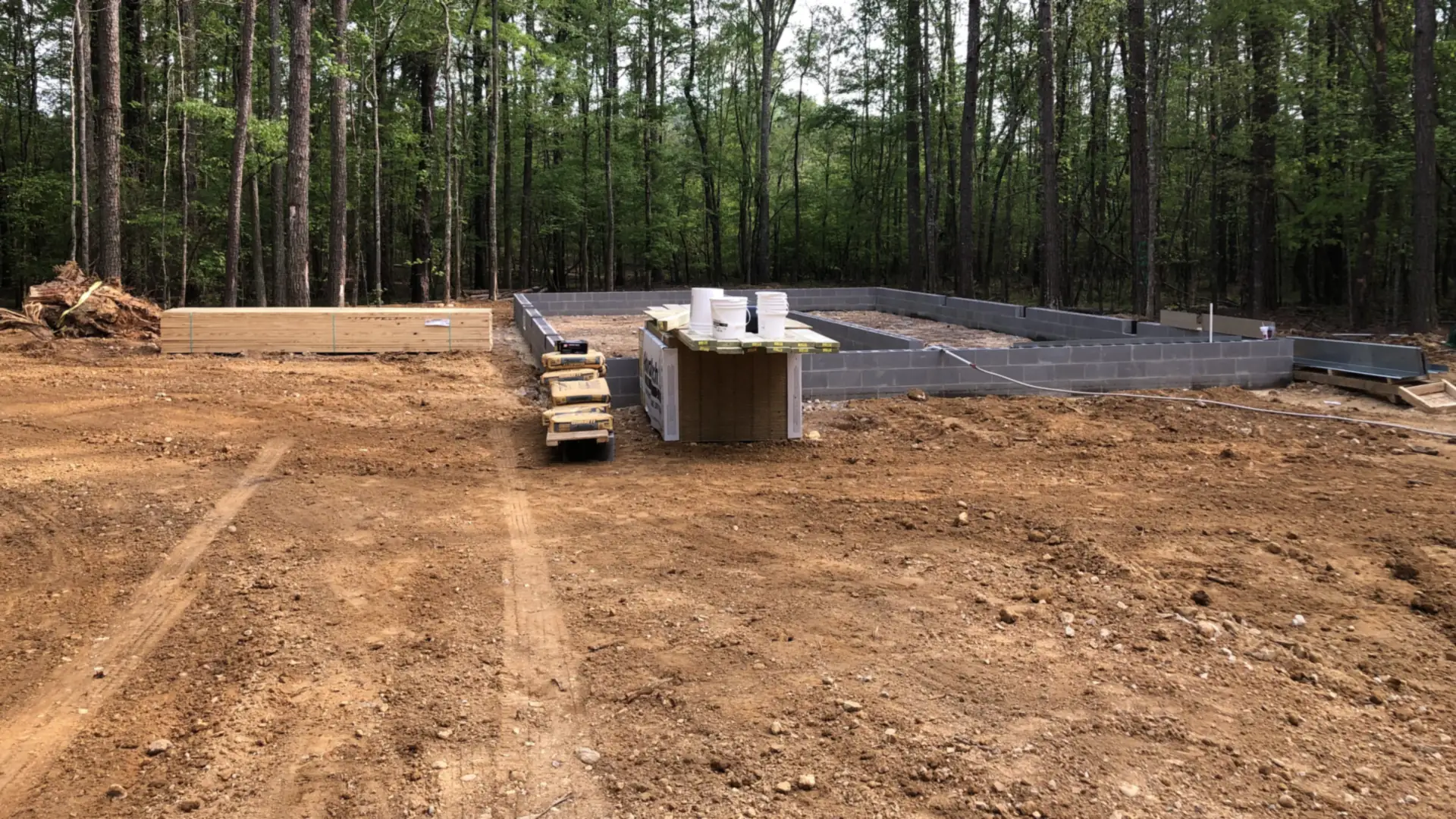
Dayton is the Rhea County seat, best known for the 1925 Scopes Trial held in the Rhea County Courthouse on Market Street. The town sits in the Tennessee Valley on the shore of Chickamauga Lake, where Richland Creek empties into the lake by the Dayton Boat Dock. Directly west, the face of Walden Ridge climbs more than 1,000 feet to the top of the Cumberland Plateau. That puts flat lakeside lots, creek bottoms and steep, rocky mountain ground all inside one short drive.
Rhea County has been building steadily, with 198 new housing permits in 2024 and 151 in 2025, and plenty of that ground starts out as woods, brush or old pasture. New homes go in along Walnut Grove Road and Back Valley Road north of town, on acreage up Dayton Mountain Highway, and on lake lots off Highway 60. Each one needs clearing and grading before the footers go in, and most homes outside the city sewer need a new septic system too. That's exactly what our land clearing services in Dayton are built for.
Boundless Excavation & Contracting is based in Birchwood, directly across the lake. From our yard it's about 10 miles and roughly 20 minutes on Highway 60 over the Tri-County Veterans Bridge to US-27 in Dayton, which is a shorter run than most of our Chattanooga jobs. We clear lots, install new septic systems and handle full site work across Hamilton County and the Chattanooga area, and we bring the same crew and equipment to Rhea County.
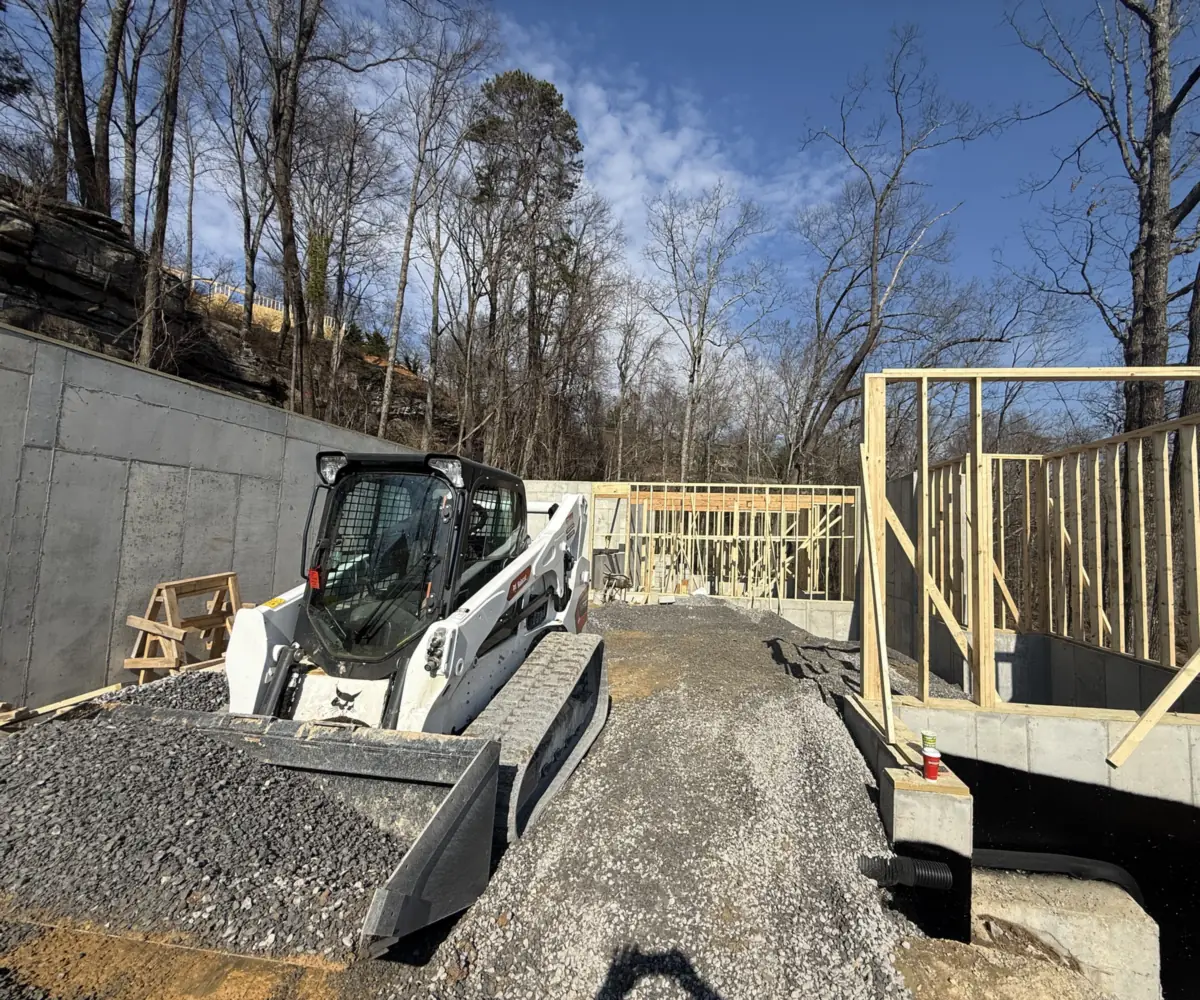
Dayton ground changes fast. Down in the Tennessee Valley, lots near Richland Creek, Little Richland Creek and the Chickamauga Lake shoreline can sit low and wet, and FEMA's updated Rhea County flood maps are worth checking before any dirt moves. Head a mile or two west and you're on the face of Walden Ridge, where the ground drops more than 1,000 feet to the valley floor and slopes come with exposed rock. Valley clay holds water after a storm, while ridge-top lots can have shallow, rocky soil, and both affect where a footer or a drain field can go.
Our crews come over from Birchwood on Highway 60, crossing the lake on the Tri-County Veterans Bridge and landing on US-27 at the south end of town. From there it's US-27 north toward Evensville and Spring City or south to Graysville, Dayton Mountain Highway (SR-30) up the mountain toward Pikeville, Third Street east toward Decatur, and Walnut Grove Road and Back Valley Road out to the north Dayton acreage. A short, direct route means we're on site early with the right machine on the trailer.
The jobs here are mostly rural and residential: overgrown pasture turned into home sites, wooded lots on the ridge, lake lots near the Dayton Boat Dock, and properties around Bryan College and Laurelbrook. Steady industrial growth helps drive it. The La-Z-Boy plant is the city's largest manufacturing employer, and Nokian Tyres has been expanding its Dayton tire factory, so new houses keep going up on the edges of town.
We plan around the rules and the seasons. Rhea County septic permits come from TDEC's Chattanooga Environmental Field Office, not a county office. Any job that disturbs an acre or more needs TDEC construction stormwater coverage before work starts, and the City of Dayton handles building permits inside city limits. We work carefully near protected land like the Laurel-Snow State Natural Area and the Richland Creek gorge. Wet winters turn valley clay to mud, so we schedule grading for dry weather and use the winter dieback to clear.
Josiah or a member of the team walks your property in person, discusses your goals, and provides a free, no-obligation estimate — with financing available through our quoting platform if you need it.
We map out the scope of work — clearing boundaries, grading plan, septic or utility placement — and handle any permitting needs before equipment ever moves.
A dedicated crew and the right equipment for the job — mulchers, excavators, grading equipment — are dispatched to your property.
Our specialized crews get to work — clearing and mulching, installing your new septic system, or handling grading, retaining walls, and concrete as part of full site work.
We clear out debris, restore the site, and walk the finished property with you to make sure everything meets your expectations before we call the job done.
Our land clearing services cover all of Dayton, from the Chickamauga Lake shoreline to the top of Walden Ridge, plus the Rhea County towns and countryside around it. We serve the Tennessee communities within about 40 miles of our Birchwood base, and we'll come walk your property.
It depends on the property. Acreage, how thick the brush and timber are, slope, rock, and whether debris is mulched in place or hauled off all change the price. A brushy pasture off Back Valley Road prices very differently than a steep, rocky lot on the face of Walden Ridge. Rather than toss out a number over the phone, we come out, walk the site with you and put together an itemized estimate at no cost.
Forestry mulching uses one machine with a mulching head to grind brush, cedar, vines and small trees into a mulch layer right where they stand. There's no burning and no hauling, and the mulch helps hold soil on slopes and near creeks like Richland Creek. It's one of the fastest ways to reclaim overgrown Rhea County pasture. We price it once we've seen the site in person at no charge, since the number of acres, how thick the growth is and the lay of the land all drive what it costs.
Yes. Putting in brand-new septic systems ranks among the main services we offer. Rhea County doesn't run its own septic program, so permits come from the state through TDEC's Chattanooga Environmental Field Office. The state reviews the soil and your site plan, then approves the system layout. Once that's in place, we excavate, set the tank, install the drain field and grade the area back. Most of our septic work around Dayton is on rural lots outside the city sewer, like those on Walden's Ridge and toward Evensville.
It depends on the size of the job and where it is. If the project disturbs an acre or more, the state requires TDEC construction stormwater coverage before work begins, inside or outside city limits. New homes inside the City of Dayton need a building permit from the city, and work in a mapped floodplain along Richland Creek or the lake can bring added review. We'll go over what your project needs during the free estimate.
Yes. Lots up Dayton Mountain Highway and along the Walden Ridge escarpment are some of the most rewarding to build on and some of the hardest to prep. We clear carefully to control erosion, cut and fill to create a level pad, and build retaining walls where the grade calls for them. Forestry mulching is often the best way to clear a slope because the mulch layer protects the soil.
We do. Along with Dayton itself, we work in Graysville, Evensville, Spring City and up on Walden's Ridge, plus Sale Creek and Soddy-Daisy just south in Hamilton County. Our Birchwood base is right across Chickamauga Lake, so Dayton and the south end of Rhea County are a quick trip for our crews.
Clearing goes especially well once late fall and winter settle in around Chickamauga Lake. The leaves are down and the undergrowth dies back, so we can see the ground and the lay of the land, and you're ready to build by spring. We watch the weather, since the clay in the Tennessee Valley gets slick after heavy rain, and we schedule grading for drier stretches. Another perk: schedules tend to be lighter in the colder months, so off-season jobs typically get started sooner.