
Lot clearing, forestry mulching, new septic installs and complete site work for landowners and builders from Dunlap and the Sequatchie River bottoms up to Lewis Chapel, Lone Oak and Cagle, with crews coming over Walden Ridge on SR-111.
At age 9, Josiah Sims got his start when his father rented a Cat 977L to clear the ground for the family's home. It took only a few days before the finish grading was entirely his job. In the years since, he has led crews, done welding and fabrication on transit buses, built additions and poured concrete, and today he's still the one running the site work.
Cherty clay on the valley floor, floodplain lots along the Sequatchie River, and shallow rock and steep grades up at Lone Oak and Cagle. We work clay, rock and ridge slopes every week around Chattanooga, so your estimate accounts for what's actually under the surface of a Sequatchie County lot.
One crew with its own machines handles land clearing and forestry mulching, while a separate crew and equipment set is dedicated to new septic installs. In a county where almost every new rural home needs both, that keeps your job from waiting behind somebody else's.
We'll make the trip over Walden Ridge, walk your property and give you a straight, free estimate. For Sequatchie County landowners who'd prefer to pay over time, financing can be arranged through our quoting platform.
Every service we offer is available across Sequatchie County, in Dunlap and out to the rural ground on both sides of the valley. Whether it's a wooded home site on Walden Ridge or a grown-up hayfield near the Sequatchie River, one call gets you a crew that can clear it, prep it and finish it.
A lot of Sequatchie County ground was farmed once and then left to grow up, so fence lines, field edges and old pasture along US-127 and East Valley Road fill in with briars, cedar and saplings fast. Up on Walden Ridge and the plateau, it's thick hardwood and pine. Brush, underbrush and small timber come out first; the debris is then either mulched on site or hauled away, leaving you open ground you can actually work. Whether you're reclaiming a field outside Dunlap or opening up a home site, the land will be ready for the surveyor, the soil test or the builder.
Forestry mulching grinds brush and saplings where they stand, so there are no burn piles and no truckloads of debris to haul down the mountain. The mulch layer it leaves behind holds soil in place, which matters on sloped lots near Lewis Chapel and Lone Oak that drain off Walden Ridge toward the valley. Selective thinning opens up a wooded tract while keeping the good hardwoods you want to build around or look out over.
The City of Dunlap runs a wastewater system for town, but most rural homes in the valley, on Walden Ridge and up around Cagle depend on septic. New systems here are permitted through the TDEC Chattanooga Environmental Field Office, and soil conditions decide where the drain field can go: cherty clay over limestone on the valley floor, and shallower, rockier ground on the ridge and plateau. Whether it's a house off Lewis Chapel Road or a commercial building in Dunlap, our septic work centers on brand-new systems and complete replacements, each one laid out exactly as the approved permit shows.
Taking a Sequatchie County lot from raw to build-ready is the core of our business: we clear it, rough-grade it, dig and pour the concrete footings, backfill, build any retaining walls and shape the finished grade. Lots on the slopes of Walden Ridge and below Fredonia Mountain often need cut-and-fill work and a retaining wall to make a level pad. Flat valley lots near the Sequatchie River bring a different job: drainage, so water moves away from the house and not toward it.
After clearing and grading wrap up, our crew digs the trenches and installs the lines every house depends on, running water, sewer and electrical conduit from the road or meter all the way to the foundation. Rural home sites here often sit well back from the road, so water line runs from the Dunlap Water System, Cagle-Fredonia Water District or Mowbray Mountain Utility District can be long. On the ridge and plateau, rock can show up close to the surface, and we're equipped to dig through it.
Old farmhouses, collapsing barns, sheds and cracked slabs are a common sight on valley farms along US-127 and SR-28, and they often have to go before something new can go up. Our crew knocks the building down, breaks up the old concrete and trucks it off, cleans up what's left and grades the spot so it's ready for whatever gets built next. That includes older homes on in-town lots in Dunlap where a teardown makes more sense than a remodel.
Whether your property is a grown-up field along East Valley Road, a wooded lot on Walden Ridge or a plateau tract out past Fredonia Mountain, we're ready to make the drive and walk it with you. Estimates are always free across Sequatchie County, from Dunlap to Lone Oak, Lewis Chapel and Cagle. Give us a call with the details, and our crew will carry the job all the way from raw land to a finished grade.
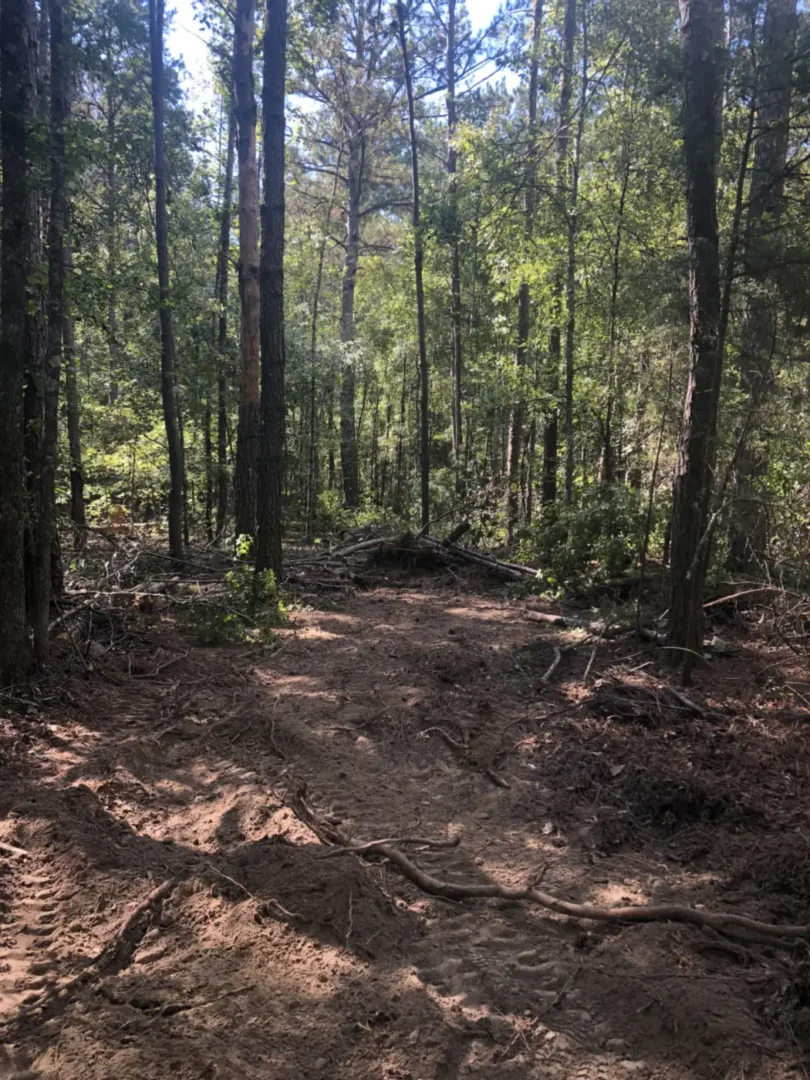
Sequatchie County sits in the middle of the Sequatchie Valley, a straight, narrow trough only about 3 to 5 miles wide cut into the Cumberland Plateau. Walden Ridge walls it off on the east, Fredonia Mountain rises more than 1,000 feet over Dunlap on the west, and the Sequatchie River winds down the middle past hayfields and pasture. Within a few miles you can go from flat river-bottom ground to a steep, rocky home site on the mountain at Lone Oak or Cagle.
People keep finding this valley. The county grew from about 14,100 people in 2010 to 15,826 at the 2020 census, and it's kept climbing since. Much of that growth lands on raw acreage: wooded lots on the ridge off SR-111, overgrown pasture along East Valley Road and US-127, and plateau tracts near Cagle. Outside the City of Dunlap's wastewater lines, most of those home sites needs a new septic system as well as clearing and grading. That's exactly what our land clearing services in Sequatchie County are built for.
Boundless Excavation & Contracting is based in Birchwood, on the Hamilton County side of Chickamauga Lake. The run to Dunlap is about an hour: Highway 60 across the Blythe Ferry bridge, US-27 through Sale Creek to Soddy-Daisy, then SR-111 straight over Walden Ridge into the valley. We do most of our clearing, septic and site work in Hamilton County and around Chattanooga, where ridge slopes, clay and rock are everyday conditions. We bring that same crew and equipment to Sequatchie County.
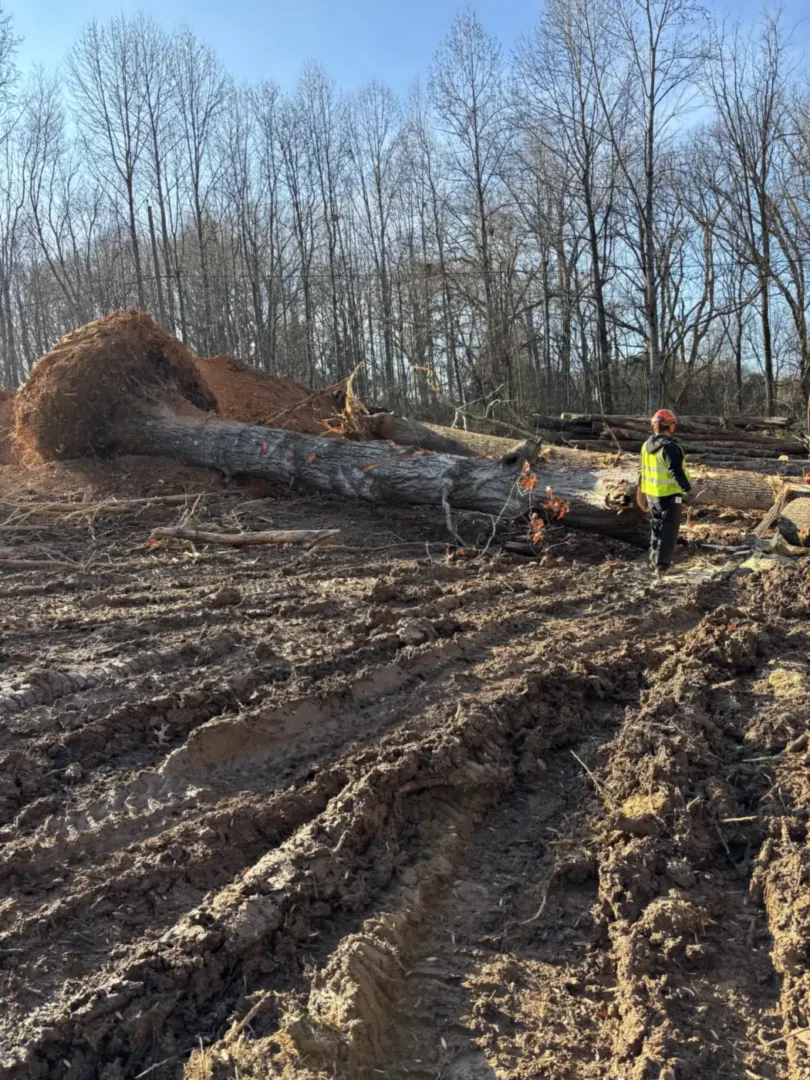
Sequatchie County is really three kinds of ground. The valley floor around Dunlap sits on limestone, dolomite and shale, weathered into a cherty clay that holds water and turns soft after a wet spell. Parcels along the Sequatchie River can fall in the floodplain, and the river has flooded hard before: its record flow came in March 1973. Climb Walden Ridge to the east or the Cumberland Plateau to the west, past Fredonia Mountain, and you're on sandstone-capped ground at around 2,000 feet, where rock sits shallower and slopes run steep. Each one clears, grades and perks differently, and we price and plan for that.
Getting here is part of the job, and we've got the route down. Crews leave Birchwood on Highway 60, cross Chickamauga Lake on the Blythe Ferry bridge, run US-27 through Sale Creek to Soddy-Daisy, then take SR-111 up over Walden Ridge past Lewis Chapel and Jones Gap Road and down into the valley at Dunlap. From there it's US-127 up the valley or south up the mountain to Lone Oak, SR-28 down toward Whitwell, or SR-111 and SR-8 up the plateau to Cagle. Knowing those roads, and how to get a loaded trailer up the mountain, means we arrive on time with the right machine.
The work changes with the elevation. In the valley, it's grown-up pasture, fence-line clearing, barn and farmhouse teardowns and new homes on a few acres off East Valley Road and US-127. On Walden Ridge around Lewis Chapel and Lone Oak, it's wooded lots with a view, where selective thinning and careful grading matter. Out near Cagle, it's larger plateau tracts bordering country like Savage Gulf State Park, and on the east side Prentice Cooper State Forest, where buyers want room and privacy and the lot usually needs everything from clearing to septic.
Permits come with the job. Sequatchie County is not a TDEC contract county, so new septic permits go through the TDEC Chattanooga Environmental Field Office, and the permit layout drives where we set the tank and drain field. Anything over an acre of disturbance needs the state's TDEC construction stormwater coverage first. Lots inside Dunlap fall under the city's own zoning, subdivision and flood ordinances, which matters near the river. We plan around the seasons too. Valley clay is best graded in drier weather, so we schedule grading for the right window.
Josiah or a member of the team walks your property in person, discusses your goals, and provides a free, no-obligation estimate — with financing available through our quoting platform if you need it.
We map out the scope of work — clearing boundaries, grading plan, septic or utility placement — and handle any permitting needs before equipment ever moves.
A dedicated crew and the right equipment for the job — mulchers, excavators, grading equipment — are dispatched to your property.
Our specialized crews get to work — clearing and mulching, installing your new septic system, or handling grading, retaining walls, and concrete as part of full site work.
We clear out debris, restore the site, and walk the finished property with you to make sure everything meets your expectations before we call the job done.
Our land clearing services in Sequatchie County cover Dunlap and the Sequatchie Valley floor, the communities on top of Walden Ridge and the plateau ground out toward Cagle. We also work every Tennessee community along our route between Birchwood and the valley, from Soddy-Daisy and Sale Creek to Signal Mountain.
It depends on the land. The price moves with the size of the tract, the density of the brush and timber, how steep and rocky the ground is, and whether we mulch the debris on site or haul it away. A few acres of grown-up pasture near Dunlap prices very differently from a steep, wooded lot on Walden Ridge. Rather than guess at a number over the phone, we drive out to your land in the valley or on the mountain, walk it with you and write up a free estimate itemized line by line.
With forestry mulching, one machine fitted with a mulching head chews brush, briars and small trees down into mulch and leaves it spread right where the growth stood. Nothing gets burned or trucked off, and on hillsides draining off Walden Ridge, that mulch layer keeps the soil in place. It works well for reclaiming overgrown fields in the valley and for opening up wooded lots near Lone Oak and Lewis Chapel. Because the price hinges on how many acres you have, how dense the growth is and how the ground lies, we give you a number only after walking the site, and that visit is free.
Yes. New septic system installation is one of our core services, and it's needed on most rural lots here. Sequatchie County isn't one of Tennessee's contract counties, so new systems are permitted by TDEC's Division of Water Resources through the Chattanooga Environmental Field Office. With an approved permit and layout in hand, our crew digs the site, sets the tank, lays out the drain field and then grades the disturbed ground back to finish. Soil type and depth to rock, which vary between the valley floor and the ridge, play a big part in that layout.
It depends on the size and location of the job. If one acre or more will be disturbed, the state's TDEC construction stormwater permit has to be in place before work starts. Lots inside the City of Dunlap also fall under the city's zoning, subdivision and flood rules, which matter on ground near the Sequatchie River. A new home on a rural lot will also need its septic permit from TDEC. Sorting out which of these apply to your lot is part of the estimate visit, so you'll know before any machine shows up.
Yes. Mountain lots are a big part of building in Sequatchie County. On slopes at Lewis Chapel and Lone Oak on Walden Ridge, and on plateau ground around Cagle, we clear carefully to control erosion, cut and fill to create a usable pad, and build retaining walls where the grade calls for them. On grades like these, forestry mulching is frequently the better clearing method, since the layer of ground-up material it leaves shields the soil.
We do. The drive is about an hour: Highway 60 across Chickamauga Lake, US-27 to Soddy-Daisy, then SR-111 over the ridge into the valley. We cover Dunlap, Lone Oak, Lewis Chapel, Brush Creek and the rural ground in between. Projects up on the plateau toward Cagle are welcome too; just tell us where the property is when you call.
For clearing work, the colder stretch from late fall through winter is hard to beat in the Sequatchie Valley. The undergrowth dies back, so we can see the ground and the fence lines, and you'll be ready to build in spring. We do watch the weather, since the valley's cherty clay gets soft after heavy rain and low ground near the Sequatchie River can stay wet. We schedule grading for drier windows. Since that's our quieter time of year, getting on the calendar then tends to get your job started sooner as well.